
OTOBO GUI & User Interface — Agent Dashboard Explained
In this guide: Overview of the OTOBO agent interface — navigation, ticket views, and customization options.
Related: Skins & themes · Customer portal · OTOBO demo · Get support
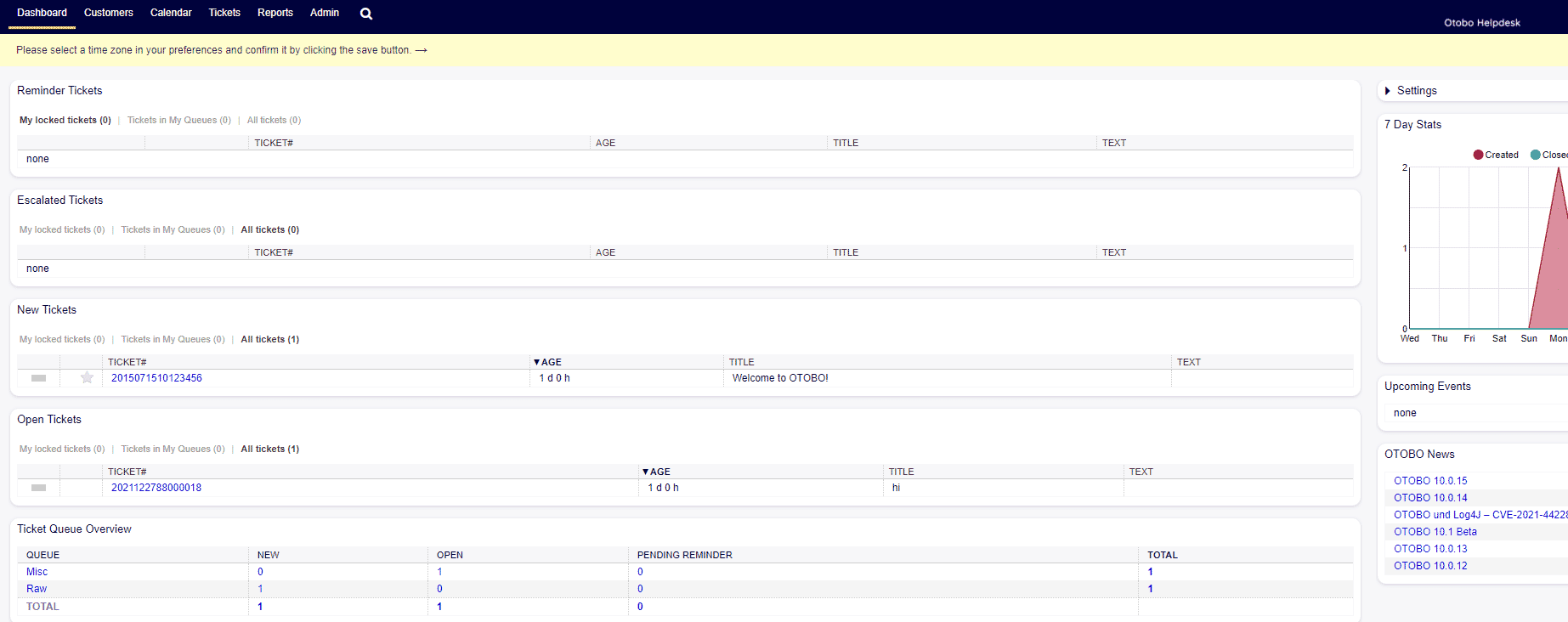 The OTOBO GUI is the agent user interface for daily support work: a dashboard of open tickets, ticket overview and detail views, search, and clear navigation — customizable with skins, widgets, and roles.
Structure and Navigation of the OTOBO GUI
Section titled “Structure and Navigation of the OTOBO GUI”The OTOBO GUI is clearly structured and allows agents and administrators to quickly access all necessary functions. The main components of the GUI are:
- Dashboard: The dashboard provides an overview of current tickets, escalations, and tasks. Agents can view ticket status at a glance and prioritize their work.
- Ticket overview: Lists all tickets assigned to an agent or a specific queue. Tickets can be filtered by priority, creation date, type, and other criteria.
- Ticket detail view: Agents open a ticket to read correspondence, write responses, add internal notes, and update fields. All previous actions are listed chronologically in the ticket history.
- Navigation menu: The sidebar menu provides quick access to ticket overviews, administration, reports, and other OTOBO modules.
- Search and filter: Full-text search and saved filters help agents find specific tickets, customers, or topics quickly.
Customization Options for the OTOBO GUI
Section titled “Customization Options for the OTOBO GUI”A major advantage of the OTOBO GUI is its adaptability. Companies can design the user interface to meet their specific requirements. Some of the customization options include:
- Themes and layouts: OTOBO supports custom skins and CSS overrides so colors, logos, and layout can reflect your corporate brand. See OTOBO skins & themes for setup instructions.
- Widgets: Dashboard widgets display open tickets, escalations, queue distribution, and other KPIs. Each agent can configure which widgets appear on their dashboard.
- Roles and permissions: Depending on the user’s role (agent, admin, customer), the GUI shows only the functions they are allowed to use. Administrators define roles and permissions in the admin area.
- Customer portal: The customer-facing interface can be branded separately from the agent GUI, with its own layout and self-service options.
Advantages of the OTOBO User Interface
Section titled “Advantages of the OTOBO User Interface”The OTOBO GUI offers many advantages that optimize daily work in customer service:
- Intuitive operation: The clear structure helps new users get started quickly, while experienced agents process tickets with fewer clicks.
- Flexibility: Layout, widgets, and color schemes can be changed without modifying core application code.
- Optimized workflows: The GUI integrates with automations and process management that handle recurring tasks such as ticket assignment and notifications.
- Mobile support: OTOBO provides a responsive interface that works on tablets and smartphones as well as on desktop browsers.
Next steps
Section titled “Next steps”Want to see the GUI in action or tailor it to your team?
- Try it yourself: Explore the agent and customer interfaces in our free OTOBO demo.
- Customize the look: Follow the skins & themes guide to match OTOBO to your corporate branding.
- Professional help: For implementation, custom skins, or workflow design, see Softoft OTOBO & Znuny services or contact us. More options are listed on support & consulting.
Frequently asked questions
What does the OTOBO GUI include?
The agent user interface covers navigation, ticket views, and the main screens agents use for day-to-day ticket handling.
Can the OTOBO user interface be customized?
Yes. Layout and appearance options — including skins — help adapt the interface to your team’s workflows.
Where should new agents start in the OTOBO GUI?
Learn the main navigation and ticket views first, then explore personal preferences and any organization-specific customizations.
What should I know about Next steps?
Want to see the GUI in action or tailor it to your team? Try it yourself: Explore the agent and customer interfaces in our free OTOBO demo. Customize the look: Follow the skins & themes guide to match OTOBO to your corporate branding. Professional help: For implementation, custom skins, or…